Training

Training, at every level.

Private lessons in your home or ours, for any breed. We help solve behavioral problems of all kinds, and our methods are built primarily on positive reinforcement.

Obedience

A trained dog lives free.

The most important skill a dog can have is a reliable recall — coming back every single time it is called. A dog that returns when called, sits, lies down, stays, and walks calmly beside you is a dog you can trust: free of constant confinement, and a true member of the family.

If your dog won't leave your guests alone, drags you down the street, or can't be trusted near the road — you are not alone, and we can help.

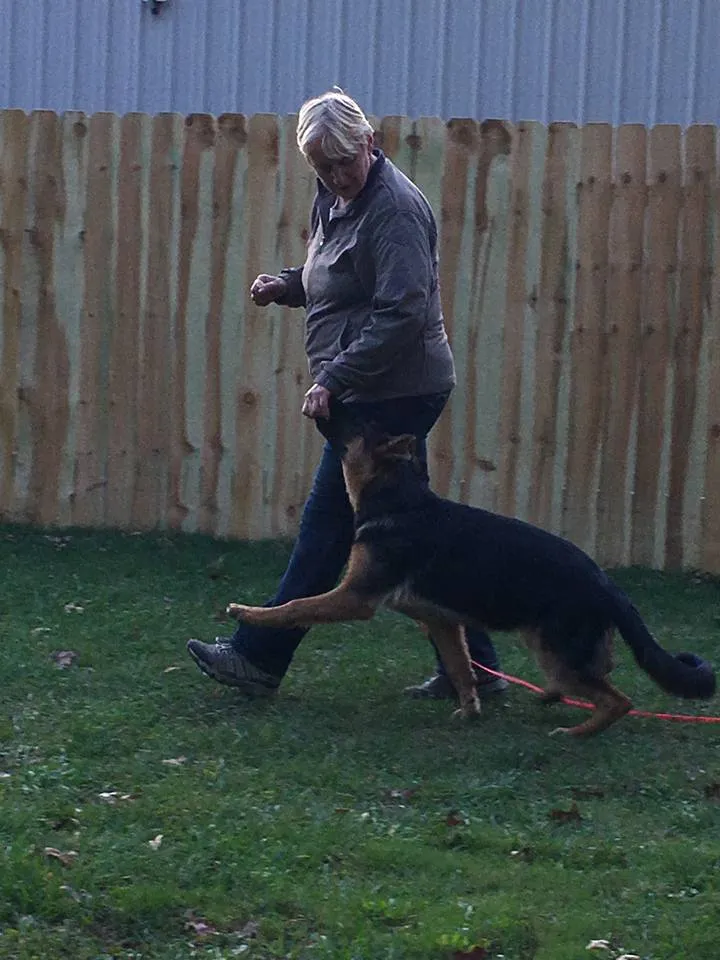
Heeling work with a young Vom Dinaburg German Shepherd

Personal Protection

Three levels of protection.

Not every dog can be trained for protection work. The dog must have a very stable, sound character and the ability to distinguish between threat and non-threat — qualities that come from breeding, not training. Protection work enhances and controls the dog's natural instincts while strengthening the bond with its family.

Level I

The Family Guardian

A friendly, social dog — your typical good-natured house dog. No one would suspect it is guard trained until your safety is compromised: on a single command, the dog restrains the attacker with a bite-and-hold, and releases when commanded.
Level II

Guard & Watch

Everything in Level I, plus the "sit and watch" command: after stopping the attacker, the dog guards them motionless while you search for weapons or call for help. If the attacker moves, the dog instantly resumes the bite-and-hold.

Level III

The Working Guard Dog

A full working guard dog, trained to transport an attacker wherever you direct. This is not a typical house dog — its main purpose is protection, not companionship. Level III dogs can be integrated into a family, but they are working dogs first.

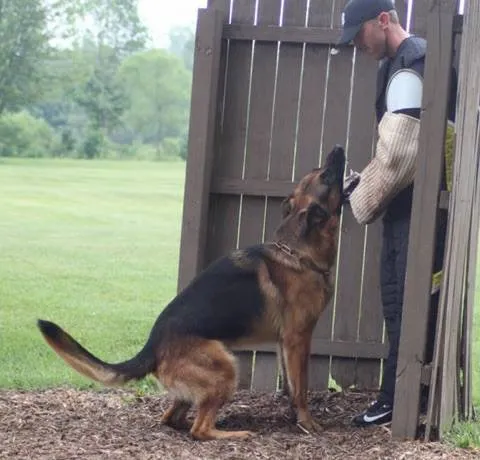
Bite-and-hold work at the blind
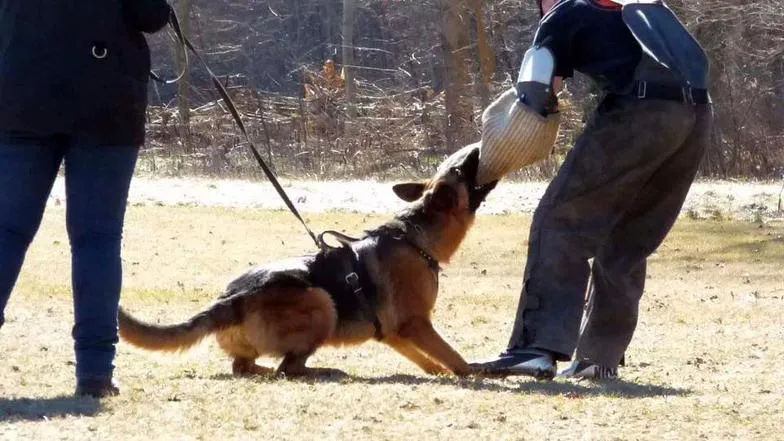
Sleeve work on the training field
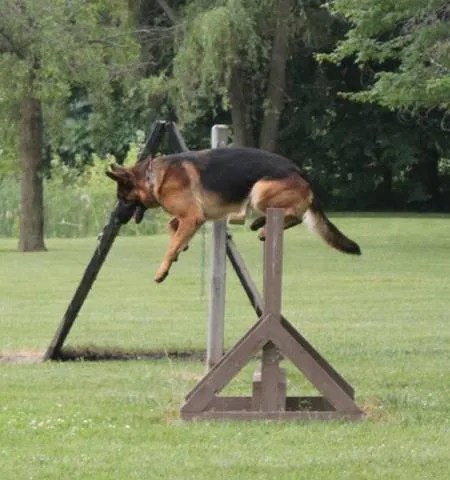
A Vom Dinaburg German Shepherd clearing the jump

Vom Dinaburg Shepherds can provide you with a trained dog — or work with your existing dog — to meet your specific needs.

Things You Need to Know

About temperament.

A German Shepherd with correct temperament is confident, self-assured, and steady — approachable, at ease in new places, and able to tell the difference between a threat and a friendly stranger. Nervousness, fearfulness, and unprovoked aggression are faults, not protection.

Temperament is inherited before it is shaped: no amount of training can put stability into a dog whose breeding lacks it. That is why every one of our breeding dogs must prove its character in the working trial before producing a litter — and why every puppy is temperament tested and matched to the right home.

More on evaluating a breeder's dogs

Show Handling

Presentation wins placings.

Good handling in the show ring can mean a much higher placing for your German Shepherd. Experienced handlers are available for show handling and conditioning on request — including help with breed surveys.

Ready to discuss your training goals?